


Seventh Grade
Seventh grade is a year of remarkable transformation. As students stand at the threshold of adolescence, they experience rapid physical, emotional, and intellectual growth. They begin to think more independently, question ideas and assumptions, and seek opportunities to express their own perspectives. Friendships, identity, and social relationships become increasingly important as they develop a stronger sense of self and their place in the world.
This is also the stage when students begin to exercise the powers of reasoning in new ways. They are eager to experiment, investigate, debate, and discover. As their thinking becomes more analytical, they gain the ability to step back from their immediate feelings, consider multiple viewpoints, and develop the beginnings of objective judgment.
The central historical theme of seventh grade is The Renaissance, Reformation, and the Age of Discovery. Students explore a period of extraordinary innovation, artistic achievement, scientific advancement, and global exploration. Through biographies, historical study, literature, science, and the arts, they discover how curiosity, courage, creativity, and critical thinking shaped the modern world.

Classroom Skills
-
Critical thinking and analytical reasoning
-
Academic responsibility and independent study habits
-
Research and evidence-based writing
-
Healthy debate and respectful discussion
-
Reflective thinking and drawing thoughtful conclusions
-
Mentorship and leadership through working with younger students
-
Learning to receive and apply constructive feedback
As the curriculum becomes increasingly rigorous, students are challenged to take greater ownership of their learning while continuing to develop creativity, resilience, and a lifelong love of discovery.
Main Lesson & Academic Subjects
Mathematics
-
Review and strengthen understanding of fractions, decimals, and percentages
-
Build a solid foundation for the transition into algebra
-
Mental math, problem solving, and mathematical reasoning
Pre-Algebra
-
Ratios and proportional reasoning
-
Negative numbers and integers
-
Inequalities
-
Exponents, powers, and square roots
-
Introduction to graphing
Geometry
-
The Fibonacci sequence
-
Phi (the Golden Ratio) and Pi
-
Geometric constructions using a compass, straightedge, and protractor
-
Perspective drawing
-
Accurate geometric forms and spatial reasoning
Language Arts
-
Grammar and vocabulary development
-
Self-editing and revision
-
Note-taking
-
Independent reading and book reports
-
Research skills
Literature & Writing
-
Poetry and ballads
-
Creative writing
-
Research paper writing
-
Critical thinking through literature and informational texts
-
Discussion, analysis, and evidence-based writing
Cyber Civics
-
Information literacy
-
Evaluating sources
-
Responsible and ethical use of information
-
Digital research skills
Science
-
Physics
-
Mechanics
-
Electricity
-
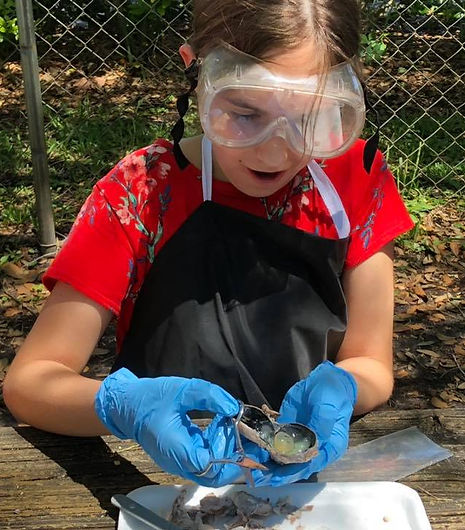
Observation and experimentation through hands-on investigations
-
-
Inorganic Chemistry
-
Combustion
-
Acids and bases
-
Salts
-
The lime cycle
-
Chemical transformations in the natural world
-
-
Human Physiology
-
The nine major body systems
-
Nutrition and healthy living
-
The relationship between body systems and overall wellness
-
History
-
The Renaissance
-
The Reformation
-
The Age of Exploration and Discovery
-
Biographies of explorers, artists, scientists, and innovators who shaped the modern world
Geography
-
Cultural world geography
-
Religions, traditions, lifestyles, and cultural perspectives
-
Ethnobotany and the relationship between people and plants
-
Map reading and geographic analysis
Class Play
Each class prepares and performs a play or presentation connected to the year's curriculum, strengthening confidence, collaboration, artistic expression, public speaking, and teamwork.


Special Subjects
World Language – Spanish
Students continue to develop their Spanish through conversation, storytelling, songs, movement, and artistic projects while expanding their vocabulary, strengthening sentence patterns, and deepening their understanding of Hispanic cultures and artists. Grammar is introduced naturally through meaningful oral communication.
Handwork
Students develop craftsmanship and creativity through hand sewing, embroidery, doll clothing construction, and the design and creation of an animal, strengthening patience, precision, and artistic problem-solving.
Sculptural Arts
Clay modeling, sculpture, and woodworking continue to build artistic technique, observation, spatial awareness, and confidence in working with a variety of materials.
Painting & Drawing
Perspective drawing introduces students to depth, proportion, and visual perception while refining technical drawing skills and artistic expression.
Music
Students continue developing musicianship through recorder, singing, violin, rhythm work, and ensemble performance.
Movement & Sports
Through the Explorer's Challenge and a variety of movement activities, students build strength, endurance, teamwork, leadership, resilience, and confidence while connecting physical activity to the spirit of exploration that defines the seventh-grade curriculum.

Outdoor Learning
At Spring River, learning extends beyond the classroom every day. Each school day includes a field experience that connects academic learning with the natural world through exploration, observation, movement, and seasonal discovery. Forests, beaches, parks, and local natural spaces become living classrooms where students develop curiosity, resilience, scientific observation, and a deep sense of stewardship. Outdoor experiences are intentionally woven into the curriculum, enriching every subject through direct experience.
Homeschool Partnership
Depending on the needs of each child and the homeschooling plan a family has chosen, additional learning at home may complement the classes selected at Spring River. Your class teacher or the Pedagogical Director is available to help families determine what additional practice or enrichment may be beneficial.
As a homeschool enrichment program, Spring River partners with families by providing engaging instruction, meaningful experiences, and a supportive learning community. Parents remain the primary educators, while Spring River offers guidance, inspiration, and educational support that complements each family's homeschool journey.